
Context

A student pursuing BA in Sociology in Kolkata found herself at a critical decision point toward the end of her graduation.

She was aware of multiple possible directions, including:

  • MA in Sociology
  • MBA
  • B.Ed
  • preparation for jobs
  • interdisciplinary paths (Media, Law, Public Policy)
  • studying abroad

However, the presence of many pathways created confusion rather than clarity.

Situation

Her challenge was not lack of opportunity—but overabundance of choices.

This led to:

  • difficulty in comparing diverse career paths
  • uncertainty about long-term direction
  • confusion about how Sociology connects to real-world careers

She was unsure:

👉  whether to stay within Sociology
👉  or move toward a more applied interdisciplinary field

Process

  1. The process focused on structured exploration and mapping of possibilities.
    1. Mapping Career Pathways

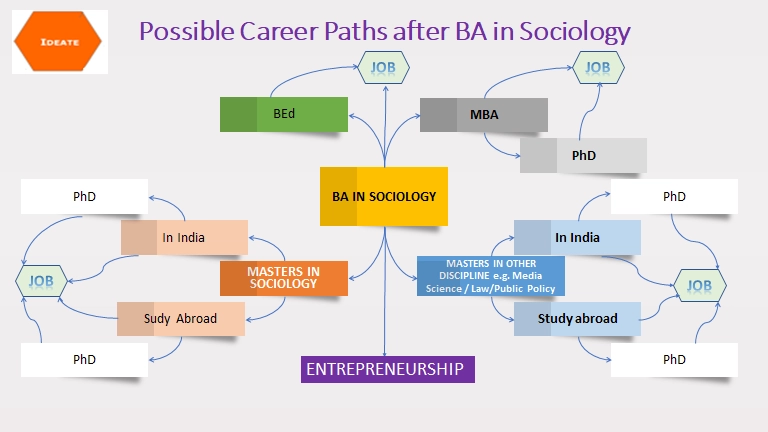
    Using a visual framework (see diagram), all possible directions after Sociology were laid out:

    • Higher studies in Sociology (India / Abroad → PhD → Academic path)
    • Professional degrees (MBA, B.Ed)
    • Interdisciplinary pathways:
      • Public Policy
      • Media
      • Law

    This helped convert vague thinking into a clear decision landscape.

    1. Understanding Interest and Alignment

    Through guided reflection, she explored:

    • interest in social issues and governance
    • inclination toward real-world impact
    • preference for applied vs theoretical work
    1. Evaluating Options

    Each option was evaluated based on:

    • personal interest
    • career relevance
    • future scope
    • alignment with long-term aspirations
    1. Narrowing Down Direction

    Through this structured comparison, Public Policy emerged as a strong fit, because it:

    • builds on Sociology background
    • offers applied engagement with real-world issues
    • provides diverse career opportunities

Outcome

The student arrived at a clear and confident decision:

👉 pursue Master’s in Public Policy

She also gained:

  • clarity about why this path suits her
  • understanding of alternative options (without confusion)
  • a structured way to think about future decisions


Reflection

“I had many options after Sociology, but I couldn’t connect them clearly to my future. This process helped me understand my interests and choose a direction that makes sense.”


Key Insight

Clarity does not come from reducing options blindly.
It comes from mapping options, understanding oneself, and identifying alignment.

Get In Touch
×