
“Will AI take my job?”
“Is AI replacing human thinking?”
“Should I compete with AI—or avoid it?”
These questions are increasingly common today.
In fact, recent surveys show that concern about AI is rising, especially among younger individuals. Nearly half believe the risks of AI may outweigh its benefits in the workplace.
At the same time, AI usage continues to grow.
This creates an interesting paradox:
👉 We are using AI more
👉 But trusting it less
Much of the anxiety comes from a simple but critical mistake:
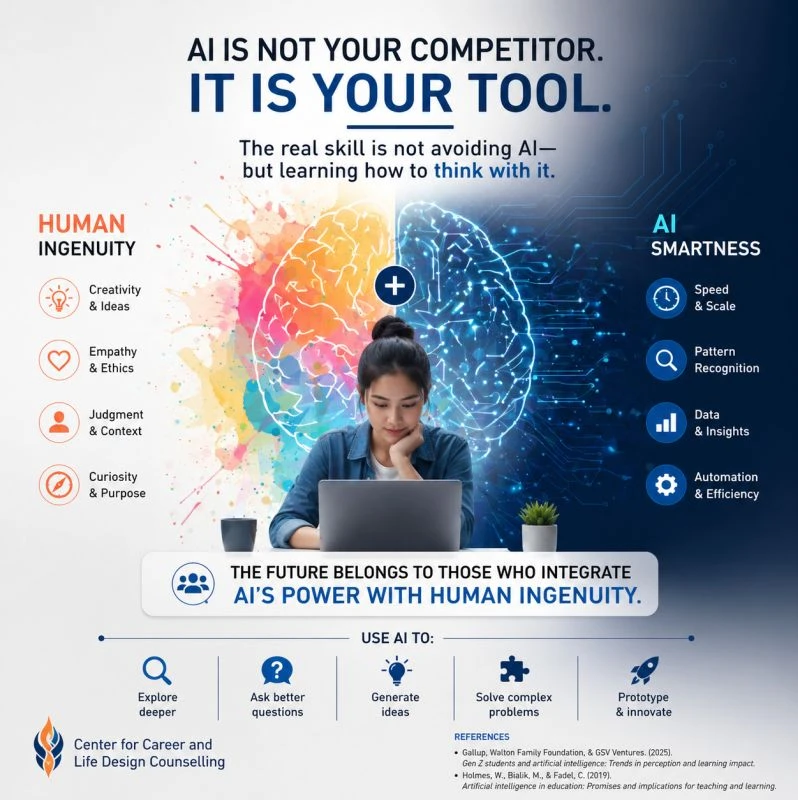
👉 We are treating AI as a competitor
Instead of what it actually is: 👉 a tool
Throughout history, every major technological shift has followed a similar pattern:
AI is no different.
Research shows that people ultimately view AI as a problem-solving tool, not an independent agent replacing human purpose.
The real challenge is not:
❌ “AI will replace me”
The real challenge is:
👉 “Will I learn how to use AI meaningfully?”
There are two possible paths:
🔴 Path 1: Passive Use
This creates an illusion of productivity—but weakens real capability.
🟢 Path 2: Active Use
This builds:
✔ deeper understanding
✔ better decision-making
✔ stronger career adaptability
The future of work is not:
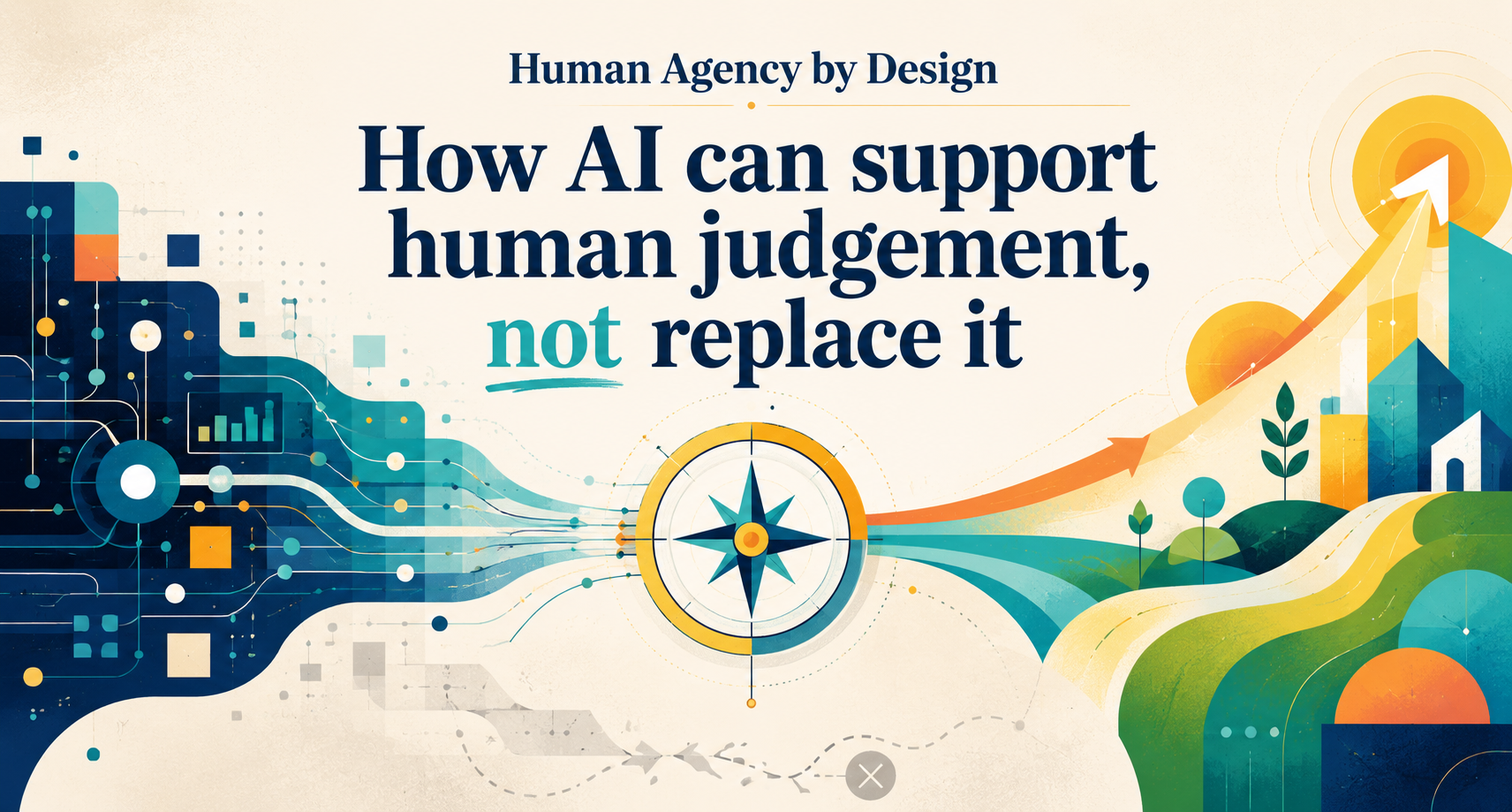
👉 Humans vs AI
It is:
👉 Humans with AI
We are already seeing this shift:
So the real question is not:
👉 “Will AI take my job?”
It is:
👉 “How do I integrate AI into my thinking, learning, and work?”
From a life design viewpoint, AI is not just a technology question—it is a directional question.
It invites you to reflect:
If you are feeling uncertain about AI’s impact on your future:
You are not alone.
But instead of reacting with fear, a more useful approach is:
👉 understanding
👉 experimenting
👉 adapting
AI can:
✔ process information faster
✔ generate content quickly
✔ assist in problem-solving
But it cannot:
❌ define your purpose
❌ understand your life context
❌ make meaningful life decisions
AI can help you choose a career.
But it cannot design your life.
That remains your responsibility.