

Context

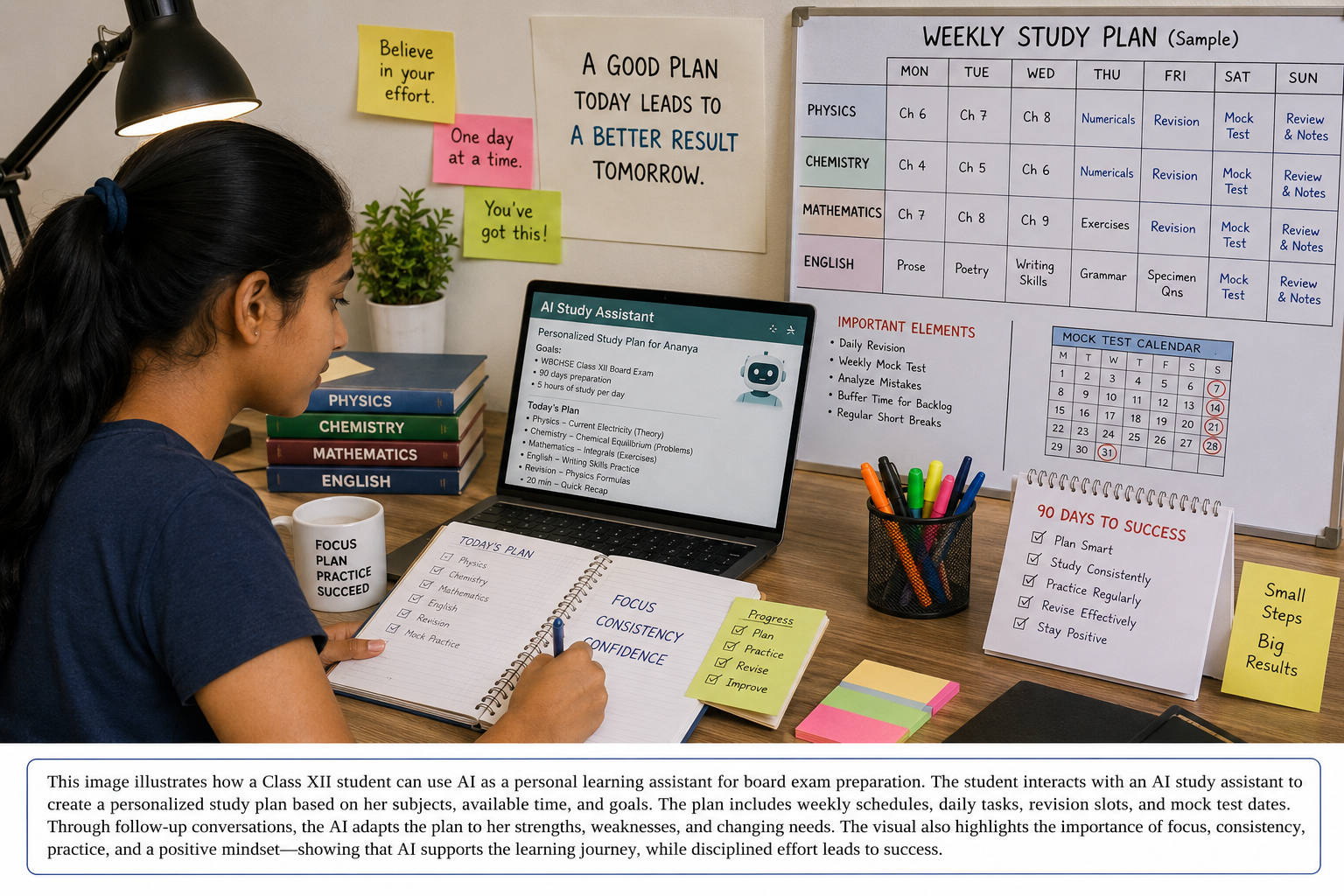
A 21-year-old student in Kolkata, recently graduated with a BBA degree, found herself at a critical decision point.

She was considering multiple options—pursuing an MBA, entering the job market, or exploring alternative career paths. However, the abundance of options led to confusion rather than clarity.


Situation

The challenge was not a lack of opportunities, but difficulty in choosing among them.

She experienced:

  • uncertainty about long-term direction
  • indecisiveness regarding next steps
  • lack of confidence in decision-making

Like many students today, she needed not just advice, but a structured way to think through her choices.


Process

The engagement followed a structured, multi-step approach:

  1. Self-Understanding through Assessments
    Personality assessments (RIASEC and Big Five) were used to understand her preferences and traits.
  2. Deep Reflection through Worksheets
    Qualitative worksheets enabled reflection on interests, values, motivations, and thought processes.
  3. Expert Interaction
    A discussion with an experienced management expert provided practical insights into MBA pathways and alternative options.
  4. Structured Synthesis
    A comprehensive report integrated assessment results, reflections, and expert inputs—offering a clear overview of her situation and options.
  5. Addressing Personal Barriers
    The process also addressed indecisiveness, lack of motivation, and decision-making challenges, ensuring a holistic understanding.


Outcome

The student was able to move from confusion to clarity—not by choosing a single path, but by designing a structured direction.

She decided to:

  • pursue job opportunities to gain work experience
  • simultaneously prepare for MBA admissions
  • actively build skills in CV writing, networking, and profile development


Reflection

“I was in a dilemma about whether to pursue an MBA or explore other options. After this process, I was able to make a confident decision. I now have a clearer understanding of my strengths and interests, along with a structured plan for the future.”


Key Insight

Clarity does not always mean choosing one option.
It often means designing a path that allows progress while keeping future possibilities open.

Why This Question Matters Today

  • “What exactly is career counselling?”
  • “Is it only for students?”
  • “Can AI replace career counsellors?”
  • “What does life design mean in career planning?”

These are not theoretical questions. They are real concerns expressed by students, professionals, and parents today.

And perhaps the confusion exists because career counselling itself is often misunderstood.

To move forward, it is important to clarify something fundamental:

Career counselling is not what most people think it is.

What Career Counselling Is NOT

Let us begin by clearing some common misconceptions.

01
It is NOT just a psychometric test report

Career counselling cannot be reduced to a few assessments and automated recommendations. While tools—and even AI—can process data, they cannot fully understand your personal context, life experiences, and evolving aspirations.

02
It is NOT a one-time decision

Choosing Science, Commerce, or Humanities is only one step in a much larger journey. Your career is not decided at one moment—it unfolds over time.

03
It is NOT fitting into predefined options

Frameworks like career clusters are useful maps. But they are not your destination. Your life cannot be reduced to a predefined category.

04
It is NOT a one-session solution

A meaningful life direction cannot be designed in a single session. It requires reflection, iteration, and time.

What Career Counselling Actually IS

Once we move beyond these misconceptions, a clearer picture emerges.

01
It is a lifelong process

Career counselling is not only for students. It is equally relevant for:

  • Working professionals
  • Career switchers
  • Individuals seeking direction at any stage
02
It integrates career and life

Career decisions taken in isolation often lead to success without satisfaction.

A more meaningful approach is to ask:

What kind of life do I want to live?

03
It is a reflective and evolving journey

Your career is not something you “choose once.” It is something you continuously construct and redesign over time.

The Shift: From Career Choice to Life Design

Modern approaches to career development are grounded in deeper frameworks:

Career Construction Theory

Careers are built through personal narratives

Life Construction Theory

Individuals actively design meaningful futures

Life Design Approach

Career is part of a larger life system

These perspectives shift the question from:
  • “Which career is right for me?” to
  • “How do I design a meaningful life—and align my career with it?”

What a Meaningful Career Counselling Process Should Do

A well-designed process should help you:

understand your values, motivations, and life themes

explore multiple possible futures (not just one “safe” path)

test ideas through real-world experiments

gradually move from confusion to clarity

Career Counselling in the Age of AI

Today, AI can suggest career options in seconds.

But the real question is:


Can AI understand your life well enough to design it?

Technology can recommend.

But it cannot:

  • Interpret your lived experience
  • Understand your evolving identity
  • Guide you through uncertainty

That requires a human, reflective, and contextual process.

A More Useful Way to Think About It

Instead of asking:


Can AI understand your life well enough to design it?

You may begin to ask:

  • What matters to me in life?
  • What kind of work aligns with that?
  • What are multiple paths I can explore?
  • How can I test these paths before committing?

That requires a human, reflective, and contextual process.

If You Are Feeling Stuck…

But it cannot:

  • Confused after graduation
  • Dissatisfied in your current job
  • Overwhelmed by too many options
  • Unsure about your future direction

You are not alone.

And more importantly—


This is not a problem of lack of options.


It is often a problem of lack of clarity.

A Thought to Leave You With

Your future is not something to be guessed. It is something to be designed.

Get In Touch
×